Leopard Sightings
Nov – Apr
Peak activity in cool weather; thin vegetation for clear views
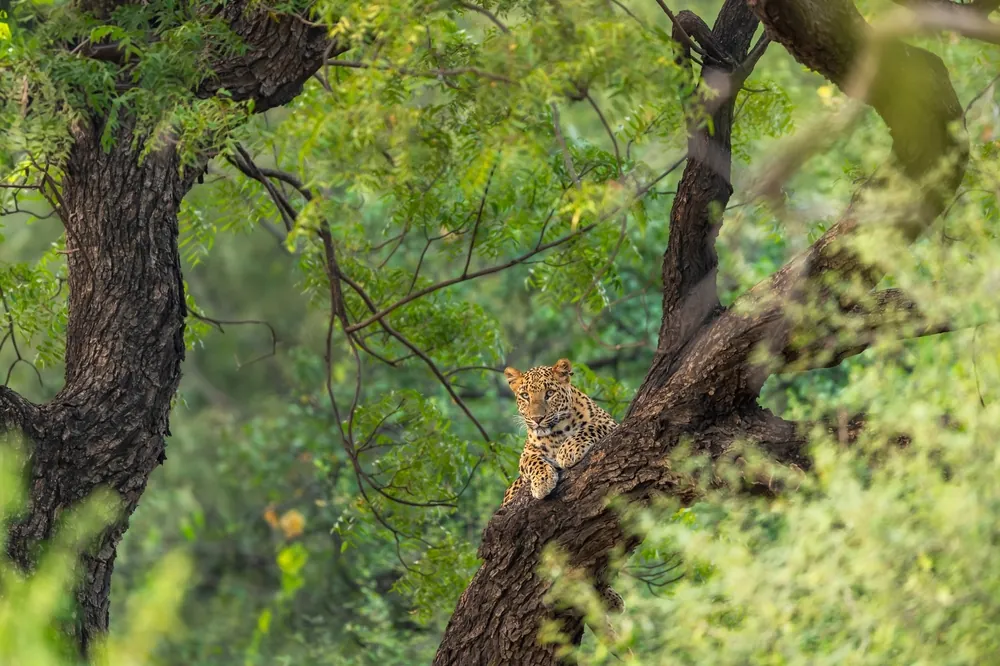
India's only urban leopard reserve — wild, accessible, and extraordinary. A complete seasonal guide to Jaipur's most remarkable wildlife experience, open 365 days a year.
Unlike India's major tiger reserves, Jhalana is open every single day of the year — the real question isn't whether you can visit, but when you'll have the most rewarding experience.
Jhalana Leopard Safari is an experience unlike anything else in Indian wildlife tourism. Tucked into 20 sq. km of Aravalli scrub forest on the eastern edge of Jaipur's Pink City, it is India's first and most celebrated leopard reserve — designated in 2017 and home to over 40 leopards living in extraordinary proximity to one of Rajasthan's busiest urban centres. The best time to visit Jhalana Leopard Safari is from November to April, when cool, comfortable temperatures make morning and evening safaris a delight, vegetation is at its most manageable for sightings, and the reserve's leopards are at peak activity. Unlike every other major wildlife reserve in India, Jhalana is open 365 days a year — including monsoon — making it uniquely accessible for last-minute Jaipur visitors, Golden Triangle travellers, and wildlife enthusiasts who can't plan months ahead. Sighting rates remain exceptionally high across all seasons, often exceeding 90% per safari slot. For those who want maximum leopard visibility with the most comfortable conditions, November to February is the sweet spot. Summer delivers intense heat but concentrates leopards near waterholes, while monsoon gifts the arid Aravalli hills a rare and dramatic green transformation. Whatever the season, Jhalana never disappoints.
Nov – Apr
Peak activity in cool weather; thin vegetation for clear views
Oct – Feb
Golden Aravalli light, rocky ridgelines, clear morning skies
Year-Round
15 minutes from Jaipur centre — pairs with heritage sightseeing
Oct – Mar
Migratory birds arrive; raptors and owls highly active in winter
Jhalana's character shifts with every season — and uniquely, every season has something to offer. Here's what to expect across the year.
Peak Season
October – February
Crisp Aravalli mornings, thin brush cover, and leopards active throughout the day — the most comfortable and rewarding safari season of the year.
Hot Season
March – June
Intense Jaipur heat, bare forest, and all wildlife funnelled to waterholes — early morning safaris in summer deliver Jhalana's most dramatic encounters.
Green Season
July – September
Jhalana stays open year-round — monsoon transforms the reserve into lush green Aravalli hills; leopard sightings are lower but never zero.
Jaipur's semi-arid climate means extreme seasonal swings — Jhalana's open jeep safaris are most comfortable between October and March. Plan your clothing accordingly.
| Month | Min °C | Max °C | Season | Safari Suitability |
|---|---|---|---|---|
| January | 10°C | 22°C | Winter | Excellent |
| February | 12°C | 25°C | Winter | Excellent |
| March | 17°C | 32°C | Spring/Summer | Very Good |
| April | 23°C | 38°C | Summer | Good (early AM) |
| May | 27°C | 42°C | Summer | Fair (heat intense) |
| June | 28°C | 43°C | Summer | Fair (dawn only) |
| July | 25°C | 34°C | Monsoon | Open · dense cover |
| August | 24°C | 32°C | Monsoon | Open · dense cover |
| September | 23°C | 33°C | Monsoon | Improving |
| October | 18°C | 32°C | Post-Monsoon | Very Good |
| November | 13°C | 27°C | Winter | Excellent |
| December | 10°C | 22°C | Winter | Excellent |
Jhalana's compact terrain, trained naturalists, and high sighting rates make it beginner-friendly — but these tips from regulars will maximise your experience.
Morning safaris (5:45–8:15 AM in summer; 6:30–9:00 AM in winter) outperform evenings; leopards are most active at dawn year-round.
A 300mm lens captures Jhalana's rocky ridgeline leopard portraits superbly; low golden-hour light on grey Aravalli rock is world-class.
Muted earth tones only; layer a fleece for December–January mornings; light breathable cotton is essential in March–June heat.
Binoculars, sunscreen SPF 50+, 1.5L water minimum, insect repellent for monsoon and post-monsoon months, and a dust-protective camera cover.
Book at least 24–48 hours ahead via the Rajasthan OBMS portal; weekdays have fewer vehicles and a more intimate experience than weekends.
Maintain absolute silence near leopard sightings; Jhalana's urban leopards are tolerant of vehicles but disturbed by noise and sudden movement.
From spotted cats on rocky ridgelines to striped hyenas slipping through the scrub — know when and where to find Jhalana's remarkable urban wildlife.
Panthera pardus fusca
Jhalana's apex predator and star — spotted on rocky ridgelines, near waterholes, and resting in Dhok trees throughout the reserve.
Best Sighting MonthsHyaena hyaena
Nocturnal scavenger and prized sighting — most visible on early dawn drives along the reserve's dusty valley tracks in winter months.
Best Sighting MonthsVulpes vulpes pusilla / Felis chaus
Two of Jhalana's most charming residents — the russet desert fox and elusive jungle cat are spotted near open scrub and valley edges in cool mornings.
Best Sighting MonthsBoselaphus tragocamelus / Rusa unicolor
Abundant prey base for Jhalana's leopards — large nilgai herds and smaller sambar groups graze across the valley floor and ridgeside trails year-round.
Best Sighting MonthsPavo cristatus
Jhalana's most vivid year-round resident — peacocks display extravagantly near the Shikaar Aodhi hunting lodge; their calls often signal leopard movement nearby.
Best Sighting MonthsSpotted Owlet, Dusky Eagle Owl & more
Jhalana's rocky terrain supports a remarkable owl population — the spotted owlet and dusky eagle owl are frequently encountered on dawn safari drives in winter.
Best Sighting MonthsEverything you need to know before visiting India's most accessible and reliable big cat safari — answered with up-to-date, practical detail.
November to April is considered the best time to visit Jhalana Leopard Safari Park as the weather is soothing and favorable at this point in time.
The Jhalana Leopard Reserve (The 1st Leopard reserve in India) is open for safari tours for visitors for all 12 months, even in the monsoon season from 1st January to 31st December every year, according to the entry timings of that particular season.
The best time to visit Jhalana Leopard Safari is from November to April. During these months, cool to moderate temperatures (10–38°C) make open jeep safaris comfortable, thinning dry-season vegetation opens clear sight lines across the Aravalli terrain, and leopards are at their most active and visible. November to February is the peak period for first-time visitors and families. March to April continues to be excellent for sightings as vegetation thins further and animals concentrate near waterholes. Unlike all major tiger reserves, Jhalana is open 365 days a year — so there is truly no bad time to visit, only better and best.
Yes — and this is one of Jhalana's most important distinctions. Jhalana Leopard Safari is open every single day of the year, including during monsoon. This makes it unique among India's major wildlife reserves, all of which close their core zones during July–September. During monsoon, leopard sightings are less predictable due to dense vegetation, but the reserve transforms into a dramatically lush green landscape. Safaris may occasionally be cancelled after particularly heavy rainfall due to track conditions — always confirm with the operator or forest office the day before a monsoon visit. For travellers in Jaipur during July–September, Jhalana remains a reliable and beautiful wildlife option.
Jhalana currently hosts over 40 leopards including cubs, making it one of the highest-density leopard habitats in the world for its size. Across Jaipur's three leopard conservation zones — Jhalana, Amagarh, and Beed Papad — the total population exceeds 70 leopards. Within Jhalana's 20 sq. km, leopard sighting success rates consistently exceed 90% per safari slot according to operators and the Rajasthan Forest Department. This is significantly higher than the sighting rate for tigers at any Indian reserve. The combination of high density, compact terrain, and trained naturalists who know individual animals' territories makes Jhalana the most reliable big cat sighting experience in India.
Jhalana runs two safari slots daily, each lasting approximately 2.5 hours. Morning safari timings vary seasonally: roughly 5:45 AM–8:15 AM in summer (April–June) and 6:30 AM–9:00 AM in winter (November–February), with intermediate timings in shoulder months. The evening safari typically runs from 3:15 PM–5:45 PM year-round, with seasonal adjustments. Morning safaris consistently outperform evenings for leopard sightings, as leopards are most active during and just after dawn. Safaris operate in open 4×4 gypsies carrying six guests plus a driver and a trained naturalist guide. All vehicles follow designated tracks through the reserve.
Safari permits for Jhalana can be booked through the Rajasthan Forest Department's online OBMS portal or through registered safari operators in Jaipur. As of 2024 pricing: Indian visitors pay approximately ₹1,350 per passenger on a shared gypsy, or ₹7,000 for an exclusive full gypsy (6 seats). Foreign visitors pay approximately ₹2,500 per passenger or ₹12,000 for a full gypsy. Prices are subject to revision by the Forest Department. Book at least 24–48 hours in advance on weekdays and 3–5 days ahead for weekends during peak season (November–February). A "Shikaar Aodhi" visit to the historic royal hunting lodge can be added as a supplementary experience through select operators.
Jhalana Leopard Safari is located on the southeastern edge of Jaipur city, in the Jhalana Doongri area near Malviya Nagar. It is approximately 6.8 km from Jaipur city centre — a 15–20 minute drive under normal traffic conditions. The reserve sits within the Aravalli Hills that form Jaipur's natural eastern boundary, and its forest begins almost immediately at the edge of residential suburbs. This extraordinary proximity to a major city is what makes Jhalana unique globally — it is the world's only major leopard reserve entirely within a major urban area. The entry gate is accessible by car, auto-rickshaw, cab, or hotel transfer.
Jhalana's supporting cast of wildlife is rich and varied. Beyond leopards, regular sightings include striped hyena (a prized dawn encounter), jungle cat, desert cat, desert fox, Indian fox, golden jackal, common mongoose, ruddy mongoose, Indian porcupine, monitor lizard, and various snake species. Ungulates include nilgai (blue bull), sambar deer, spotted deer (chital), and chinkara — the prey base that sustains the leopard population. Over 200 bird species are recorded including peacock, Indian roller, bee-eater, kingfisher, spotted owlet, dusky eagle owl, Indian pitta (in monsoon), and numerous migratory winter visitors. The historic Shikaar Aodhi, the Maharajas' royal hunting lodge inside the reserve, is accessible as an add-on experience.
Jhalana was formally designated as India's first dedicated Leopard Reserve in 2017 by the Rajasthan government as part of a state initiative called "Project Leopard" — a landmark policy moment for Indian wildlife conservation. While leopards had lived in the Jhalana forest for generations (becoming the apex predator after the last resident tiger was shot in 1948), the formal reserve designation gave the habitat legal protected status and structured it for sustainable eco-tourism. The reserve first opened to public guided safaris in December 2016. After Jhalana's success, Jaipur's second leopard zone, Amagarh, opened on World Biodiversity Day in 2022, and a third zone at Beed Papad was developed in 2025.
Absolutely — and this is one of Jhalana's greatest practical advantages. A morning safari at Jhalana concludes by 9:00 AM at latest, leaving a full day for Jaipur's heritage circuit. An Amber Fort visit, City Palace, Jantar Mantar, Hawa Mahal, and Nahargarh Fort are all accessible within 30 minutes of the reserve — making a same-day Jhalana safari + Jaipur heritage itinerary entirely feasible. Alternatively, an evening safari (3:15–5:45 PM) can follow a morning spent at Jaipur's monuments. This unique combination of urban wildlife and world-class heritage in a single day is only possible because of Jhalana's extraordinary city-centre location — no other leopard or tiger reserve in India offers this level of itinerary flexibility.
Both Jhalana and Amagarh are Aravalli forest leopard reserves within Jaipur's boundary, connected by habitat corridors, but they differ in character. Jhalana (20 sq. km, India's first leopard reserve, est. 2017) is the more established and popular of the two, with higher infrastructure, trained naturalist guides, and the iconic Shikaar Aodhi hunting lodge. It has the higher sighting rate and is better developed for tourism. Amagarh, which opened in May 2022, is a newer, wilder, and less visited reserve to Jhalana's north — separated by a national highway. Amagarh offers a rawer, less crowded safari experience but with somewhat lower sighting consistency than Jhalana. Many Jaipur wildlife visits now combine both reserves across morning and evening slots, giving a comprehensive picture of Jaipur's remarkable urban leopard landscape.
A comprehensive seasonal guide covering what makes Jhalana truly unique, how each season shapes the experience, and how to choose the right time for your visit.
Jhalana Leopard Safari exists at a remarkable intersection — a thriving wild leopard population living in a 20 sq. km forest reserve entirely within the boundaries of Jaipur, one of Rajasthan's most visited cities. India's first dedicated leopard reserve, formally designated in 2017 and opened to the public in December 2016, Jhalana represents an extraordinary model of urban wildlife conservation in a country where big cat habitats are increasingly fragmented. The reserve's Aravalli rocky terrain — sharp ridgelines, narrow scrub valleys, thorny Dhok and Khejri woodland, and seasonal waterholes — creates perfect leopard habitat within earshot of the Pink City's traffic.
The best overall time to visit Jhalana Leopard Safari is from November to April. During this period, the combination of cool to moderate temperatures, thinning dry-season vegetation, and highly active leopards creates the ideal safari environment. November and December offer the most comfortable morning temperatures (10–12°C at dawn), while February to April maintains excellent sighting conditions as vegetation continues to thin. This extended window — nearly six months — gives Jhalana an exceptional accessibility advantage over seasonal tiger reserves.
The key difference between Jhalana and India's major tiger reserves lies in its year-round accessibility. While Bandhavgarh, Ranthambore, and Sariska all have monsoon closure periods that limit visitation to roughly nine months, Jhalana never closes. This makes it the perfect wildlife companion for Jaipur visits at any time of year — a spontaneous dawn safari before a day of heritage sightseeing, or a last evening drive before leaving the Pink City. Safari permits can be booked through the official Rajasthan Online Booking and Management System (OBMS) portal or through registered operators, typically 24–48 hours in advance for most of the year, with slightly longer lead times needed during the November–February peak.
Temperature at Jhalana tracks Jaipur's climate closely — pleasant 10–25°C winters, intense 38–43°C Rajasthan summers, and warm humid monsoon months between 24–34°C. Vegetation density is the variable that most directly impacts sighting success: the dry deciduous forest is most open from November through May, and densest (and most dramatic for photography) from July through September. Even in dense monsoon cover, Jhalana's consistently high leopard population means sightings are never impossible — just less predictable than in peak season.
Jhalana is the only reserve in India — and one of very few in the world — where you can experience a wild leopard safari inside a major city. With over 40 leopards in 20 sq. km, it holds one of the highest leopard densities of any protected area globally. It is open 365 days a year (unlike all major tiger reserves, which close during monsoon), accessible in 15 minutes from central Jaipur, and pairs effortlessly with a Golden Triangle or Rajasthan heritage itinerary. Sighting success rates consistently exceed 90% per safari slot — making it the most reliable big cat sighting experience in India.
Winter is Jhalana Leopard Safari's most celebrated season, and by every measure the most rewarding time to experience this remarkable urban reserve. As October arrives and Rajasthan's monsoon retreats, the Aravalli scrub forest transitions from monsoon-lush to a drier, more navigable landscape. Vegetation begins to thin, visibility across the reserve's narrow rocky valleys and hillside trails improves week by week, and Jhalana's leopard population — freed from the dense cover of the wet season — becomes increasingly visible in open terrain.
November through January represents the peak of the winter experience. Pre-dawn temperatures in December and January can dip to 10°C in Jaipur — cool enough to require a light fleece for open jeep safaris, but far from uncomfortable. By mid-morning, temperatures climb to a delightful 20–22°C that makes extended time on safari pleasant and unhurried. Leopards in Jhalana's winter behave with remarkable openness — they bask on sun-warmed Aravalli rock faces in the morning hours, move along ridgelines in full view of safari vehicles, and occasionally descend to valley waterholes with a relaxed, unhurried gait that allows exceptional photographic opportunities.
The dry vegetation of winter also means that the alarm calls of prey animals — nilgai, spotted deer, and peafowl — travel clearly through the quiet forest, allowing experienced naturalists to track leopard movement by sound before visual contact is made. The striped hyena, Jhalana's other top nocturnal predator, is also most frequently sighted in the cold, dark pre-dawn hour of the morning safari. Winter birdwatching is exceptional — the reserve records over 200 species, and winter swells these with migratory arrivals including various raptors, owls, and grassland birds.
From a practical perspective, winter weekends in Jhalana are busy — Jaipur's proximity means the reserve sees high day-tripper and tourist volumes on Saturdays and Sundays. Book permits at least 24–48 hours in advance for weekdays, and 3–5 days ahead for weekends. The morning safari slot is overwhelmingly preferred for sightings. Winter at Jhalana is the ideal choice for families combining wildlife with Jaipur's heritage circuit, photographers seeking Aravalli leopard portraits, and international visitors on a Golden Triangle itinerary.
Summer at Jhalana is Rajasthan at its most demanding — and for those willing to engage early, at its most rewarding for wildlife. From March onwards, temperatures climb steadily from a manageable 32°C to a punishing 42–43°C by May and June. The Aravalli scrub forest, already sparse in winter, becomes almost entirely leafless in summer — bare rock, exposed hillsides, and open sandy tracks that provide the clearest views of the reserve's interior that any season allows.
The dynamics of summer wildlife viewing at Jhalana mirror those of Rajasthan's tiger reserves: as surface water disappears from the rocky terrain, all animal life concentrates at the reserve's maintained waterholes. Leopards visit these points in the pre-dawn and early morning hours to drink, and sometimes to cool themselves in any available shade nearby. The combination of open vegetation and waterhole concentration makes April and May particularly productive for close, clear sightings. Striped hyenas, jungle cats, and desert foxes are also more visible near water sources in summer.
The essential discipline in summer is timing. The morning safari window — beginning as early as 5:45 AM — must be used to its full advantage. By 9 AM, temperatures are already uncomfortable; by 11 AM, the forest is silent and the animals have retreated to shade. Evening safaris from 3:15 PM to 5:45 PM also have value in summer as temperatures moderate and leopards begin to stir before sunset. Carry at least 1.5–2 litres of water per person, apply sunscreen before boarding the vehicle, wear full-sleeved light cotton, and use a hat and UV sunglasses on open jeep safaris.
Summer at Jhalana is the least crowded of the three seasons — a meaningful advantage in a reserve where vehicle numbers are strictly limited. The near-private early morning safari experience, combined with exceptional visibility across the bare Aravalli terrain, makes this the season favoured by wildlife photographers and serious leopard watchers who rate encounter quality above personal comfort.
The monsoon at Jhalana Leopard Safari is a season that sets it decisively apart from every other major wildlife reserve in India. While Bandhavgarh closes entirely, Ranthambore's core zones shut down, and Sariska's core forest goes off-limits — Jhalana stays open, every day, year-round. This is not a minor distinction; it is the defining characteristic of an urban reserve that cannot afford the luxury of seasonal closure. The Aravalli forest within Jaipur's boundaries is managed differently from national parks, and the result is a wildlife experience available to visitors in July and August that simply does not exist elsewhere.
What monsoon takes away in visibility, it returns in atmosphere. The Aravalli hills around Jhalana, typically pale and sun-bleached for most of the year, undergo a startling transformation during the rains. Rocky hillsides turn vivid green almost overnight, seasonal streams run through previously dry gullies, and the Dhok tree forest fills with the calls of breeding birds. The historic Shikaar Aodhi — the three-storeyed royal hunting lodge built by the Maharajas of Jaipur within the reserve — takes on a particularly dramatic appearance framed against monsoon clouds and green hillsides. Landscape and architectural photography reaches its seasonal peak in July and August.
Leopard sightings in monsoon are less reliable but not absent. With water available everywhere, leopards disperse widely rather than concentrating at fixed points, making them harder to locate on a set safari track. However, they are never truly hidden — Jhalana's 40+ residents are resident year-round, and sightings in monsoon, while less predictable, carry an additional magic: a leopard moving through rain-soaked green undergrowth is a dramatically different image from the same animal on a dry winter ridge. Resident birds — Indian pitta, bee-eaters, and numerous insectivorous species — are at their vocal and colourful peak during monsoon breeding season.
Jhalana in monsoon suits spontaneous travellers visiting Jaipur who want a wildlife add-on regardless of season, budget-conscious visitors (accommodation rates are lowest in July–September), and photographers who want the rare experience of a big cat reserve in full monsoon transformation. Confirm individual safari availability with the forest office before visiting in monsoon, as specific slots may occasionally be cancelled after heavy rain makes certain tracks temporarily unsafe.
Most forest reserve parks are closed during the monsoon time, but here is the reserve forest to compensate for it. The Jhalana Leopard Reserve or Jhalana Leopard Safari is open for visitors throughout the year from 1st January to 31st December as per the entry timings, which vary from season to season.
Although one can enjoy the leopard safari any time of the year, November to April is considered the best time to visit Jhalana Leopard Safari Park as the weather is soothing and favorable at this point in time.
The Winter season, from October to March, is the peak and the most visited season as winter comes with beauty and greenery after the monsoon season, making the surroundings appealing to wildlife lovers.
Bird loves will also get the chance to see the beautiful birds, as many migratory birds visit Jhalana in the winter.
If you are traveling in winter, please don’t forget to pre-book a safari and carry warm clothes.
The summer season, from April to June, is the least preferred season by visitors due to the severe heat. The temperature in this period is generally high in Jhalana as it goes up to 45-degree celsius.
Although it would be difficult for most people to roam inside the forest in such unbearable heat, if you can tolerate the heat, here are the two reasons you should visit in summer.
First, it is less crowded, and second, there would be a high probability of seeing leopards in and around the water bodies. But you must apply sunscreen and wear full sleeves clothes to protect yourself from the hot blazing sun.
The monsoon season can never make a wildlife enthusiast happy, as most of the reserve forests are closed to visitors, but here is something to compensate.
Jhalana Leopard Safari park remains open for visitors even during the monsoon season; sighting and capturing leopards in such lush green dense foliage is a lifetime experience.
But it would help if you carried a raincoat while traveling for the Jhalana safari.